

How to Build Wealth Through Smart Multifamily Underwriting
Multifamily underwriting is the foundation of confident apartment investing, and mastering it separates investors who protect their capital from those who blindly trust operator projections.
In a recent episode of The Whole Enchilada of Real Estate Investing, I sat down with Vessi Kapoulian. She is the Founder of Dream Believe Achieve Capital Group, a real estate investment firm based in Los Angeles, CA.
Here’s a snippet of this conversation:
Vessi is a former commercial lender turned multifamily investor, now managing a portfolio worth over $50 million. Vessi Kapoulian’s multifamily investing framework puts this principle into action by teaching investors exactly how to evaluate multifamily deals, vet operators, and underwrite with confidence.
Our conversation covered the critical skills every investor needs to evaluate deals, vet operators, and make informed decisions in today’s challenging market.
Tune in to the full episode:
Who Is Vessi Kapoulian?
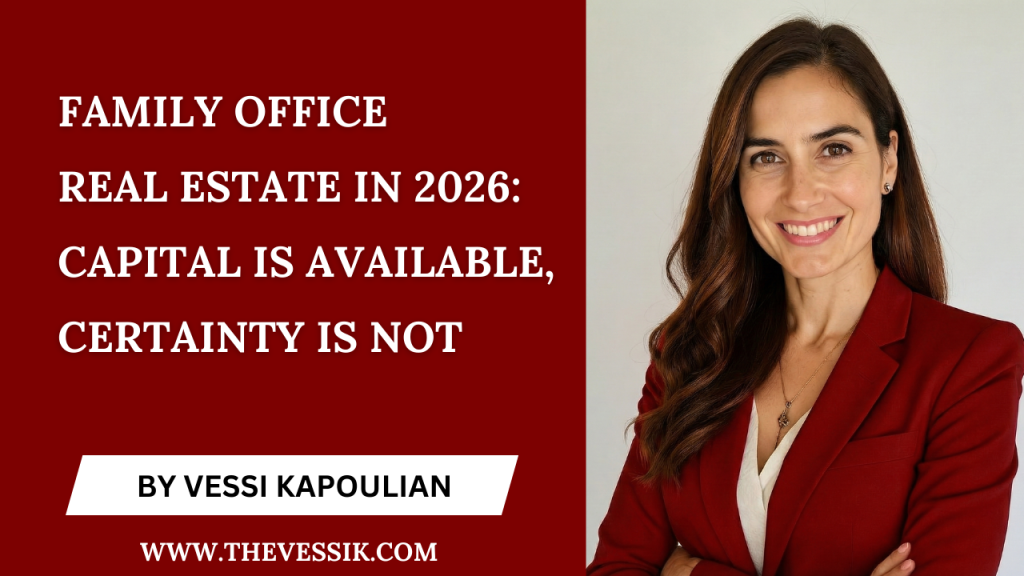
Vessi Kapoulian is the Founder of Dream Believe Achieve Capital Group (DBA Capital Group), a real estate investment firm based in Los Angeles, CA. She is a former commercial lender turned multifamily investor, now managing a portfolio worth over $50 million.
Born in Bulgaria during the Iron Curtain era, her only path to America was earning a full academic scholarship. After graduate school, she spent most of her career as a commercial lender, financing middle-market companies and a substantial portfolio of commercial real estate.
Today, she wears multiple hats. She is an apartment syndication advisor helping passive investors avoid costly mistakes. She is the author of Mastering Multifamily Underwriting: Five Steps to Confident Risk Smart Apartment Investing. And she has created a multifamily underwriting course designed specifically for beginner investors who want to learn how to analyze apartment investments before committing capital.
From Commercial Lending to Apartment Syndication
Vessi grew up in Bulgaria during the Iron Curtain era. Her only path to America was earning a full academic scholarship. After graduate school, she spent most of her career as a commercial lender, financing middle-market companies and a substantial portfolio of commercial real estate.
That experience positioned her well for apartment syndication. As she explained during our conversation, the transition required a mindset shift.
“As a lender, you look at the risks, the downside. As an investor, you look at the opportunities and the upside. It’s important to have a balance between both.”
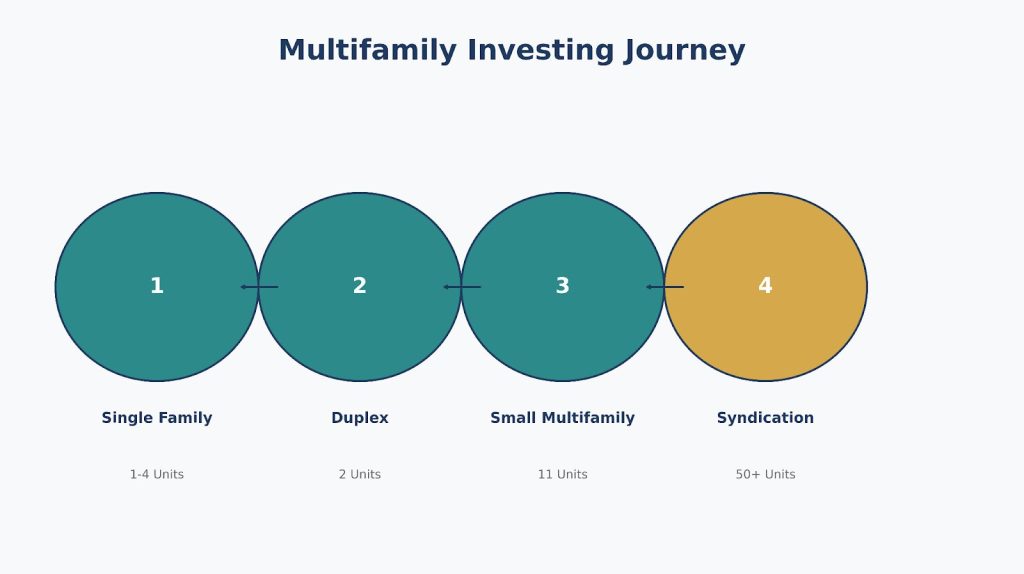
She started with single-family homes, moved to a duplex, then an 11-unit property, and eventually transitioned to larger syndications. That gradual journey gave her the operational knowledge needed to evaluate deals with confidence.
Why People Matter More Than Numbers
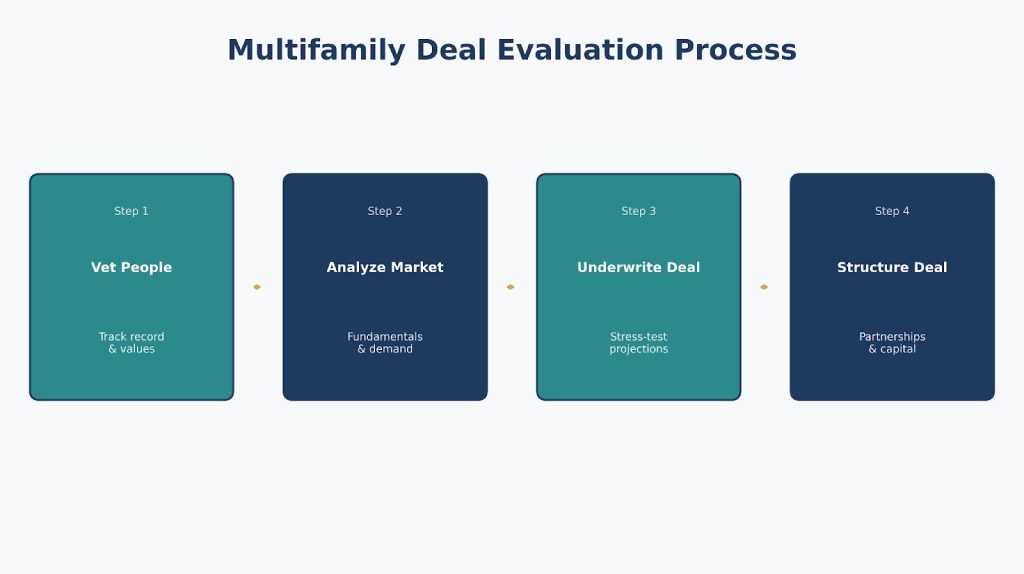
When I asked Vessi how she evaluates multifamily deals, her answer surprised me. She starts with the people, not the spreadsheets.
“The numbers are actually the easy part. They’re very technical, straightforward. But it really starts with the people, and that’s really the part that takes the most time. It’s more of an art than a science.”
Vetting an operator requires multiple conversations to understand how they think, whether your values align, and their track record. You might find an amazing deal, but a bad operator can run it into the ground. The reverse is also true. A skilled operator can take a distressed property and create significant value.
The Numbers Behind Conservative Underwriting
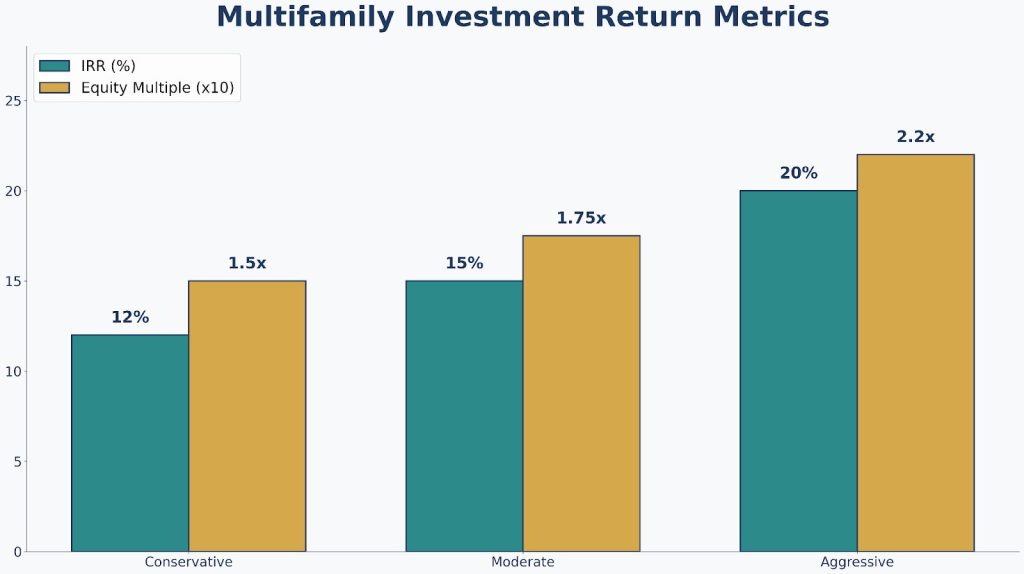
While people come first, the numbers still matter. Vessi targets around 15% internal rate of return (IRR) over a five to seven year holding period. In terms of equity multiples, that ranges from 1.5x to 2x.
She is clear that these are projections, not guarantees. “Understand as investors, we all take risks. None of these are guaranteed, but that’s the goal before entering into a deal.”
Her approach focuses on value-priced properties that are mature and aligned with the marketplace. She targets a balanced combination of cash flow and appreciation through operational improvements rather than high-risk rehab projects.
Out-of-State Investing Requires Local Partners
Vessi is based in Los Angeles, but her investments are all outside California. Her primary goal is cash flow, and California markets made that difficult to achieve.
The key to making long-distance real estate investing work is partnering with people who are local to those markets. Her partners source deals, and she vets the numbers using her commercial lending background. Once a deal closes, she participates in asset management calls and strategic decisions. She invests in every deal she recommends to her investors.
Additional Income Streams Beyond Rent
We explored creating additional income streams on multifamily properties. This becomes critical when rents have already been maximized.
“It’s really understanding what the local residents demand and tailoring those services based on that demand.”
In Class B properties, ancillary services like valet trash and pet amenities generate incremental income. In Class C workforce housing, billing back utilities helps offset expenses. I have discovered 25 profit centers over and above what a normal landlord collects. You do not need to keep adding properties to grow your income. You can increase revenue from each property you already own.
Balancing a W2 Job With Real Estate
Vessi built her portfolio while working full-time. She used the hours between 5:00 AM and 9:00 AM and 5:00 PM and 9:00 PM to build her investing business.
“It doesn’t have to be this gigantic step forward. I’m a firm believer in small, but consistent and persistent steps.”
She stressed having a strong why. If you are not passionate about the work, it becomes easy to lose momentum when challenges arise.
The Pain That Led to Teaching Multifamily Underwriting
Over the past couple of years, Vessi received increasing calls from investors who had gotten into deals they did not fully understand. Many trusted operators presented overly optimistic assumptions. When the commercial real estate downturn hit, those investors faced capital calls and did not know what to do.
That environment created pain for passive investors who relied on sponsor projections without understanding how to validate them. Vessi saw this pattern repeatedly and decided to teach others how to analyze deals independently.
“If you know how to analyze the numbers, how to poke holes, you are pretty much protected. What is a new investor? You don’t know what you don’t know.”
She created a structured curriculum for beginner investors and recently released Mastering Multifamily Underwriting: Five Steps to Confident Risk Smart Apartment Investing. Her philosophy is simple but powerful.
Mastering Multifamily Underwriting: The Book
Vessi recently released a book titled Mastering Multifamily Underwriting: Five Steps to Confident Risk Smart Apartment Investing. The book captures her years of commercial lending and investing experience in a format accessible to new investors.
Her philosophy centers on the idea that an educated investor is an empowered investor. Whether through her book, her course, or her consulting work, she is committed to helping people protect their capital and hard-earned money.
“Dream, believe and achieve.”
That phrase captures her mindset. She even built her business name around it. DBA Capital Group stands for Dream, Believe, Achieve.
Apartments as Incubators for Homeownership
I shared with Vessi how I use apartments as incubators for my path to homeownership program. Research shows that 78% of apartment residents do not want to live there permanently. They want single-family homes.
“Legacy is not just financial. It’s who you help, how you help, how you impact people along the way.”
That represents an enormous market of people who may have less than perfect credit. My program helps residents build toward homeownership while living in our properties.
Connect With Vessi Kapoulian
Connect with Vessi on LinkedIn. For underwriting resources, visit MasteringMultifamilyUnderwriting.com. To learn about passive investing in apartments, visit DBA Capital Group.
Want to hear the full conversation with Vessi Kapoulian? We covered even more ground on evaluating operators, navigating today’s market challenges, and building a portfolio while working a full-time job.
FAQ: Multifamily Underwriting and Apartment Investing
What is multifamily underwriting? Multifamily underwriting is the process of analyzing apartment investment opportunities by evaluating the operator, market conditions, financial projections, and risk factors to determine whether a deal meets your investment criteria.
What is a good IRR for multifamily investing? A good IRR for multifamily deals typically ranges from 12% to 15% for conservative investments. Vessi Kapoulian targets around 15% IRR over a five to seven-year holding period with equity multiples of 1.5x to 2x.
How do you evaluate a multifamily deal? Start by vetting the operator through multiple conversations about their track record and values. Then analyze the market fundamentals and key performance indicators. Finally, stress-test the financial projections and validate the assumptions in the underwriting.
Can you invest in multifamily while working a full-time job? Yes. Vessi built her portfolio while working a W2 job by using early morning and evening hours. Small, consistent steps compound over time. Start with education and work on deals during your available hours.
Why invest out of state in multifamily? Many investors look outside their local markets when cash flow opportunities are limited. Success requires partnering with local operators and using professional property management to handle day-to-day operations.
How do you create additional income on apartment properties? Additional income streams include ancillary services like valet trash, pet amenities, and storage. Utility billbacks help offset expenses in workforce housing. Understanding resident demand is key to implementing the right services.
If you want to scale your own multifamily real estate investing portfolio, the fundamentals Vessi shared apply whether you are buying your first duplex or syndicating larger apartment complexes. Ready to share your own real estate journey? Apply to be a guest speaker on The Whole Enchilada of Real Estate Investing.
Apply as a Guest on The Whole Enchilada of Real Estate Investing
If you have hands-on experience building a real estate business, I invite you to apply to be a guest on the show. You can also explore more episodes and resources at the Icons of Real Estate hub.
The Whole Enchilada of Real Estate Investing is produced through the Icons of Real Estate podcast production.
Marigona Gllarevaa – Jan 01, 1970